
The Rise of Microlearning: Why Short Online Lessons Work for Busy Families

In This Article
- ARTICLE
- August 28, 2025
- 12:32 pm
For many families in the UK, balancing education, work, and daily life can feel like a juggling act. Long classroom-style lessons do not always fit neatly into the rhythm of modern family life, especially for parents choosing an online homeschool curriculum UK. That is why more families are turning to microlearning as the smarter, more flexible way forward.
Microlearning delivers education in short, focused lessons that students can complete at their own pace. It is an approach that aligns perfectly with the realities of homeschooling and the demands of everyday family life, and it is a model already built into EdEx Onlne Education’s KS3 and IGCSE online learning platform.
What is Microlearning?
Microlearning simply means breaking down subjects into smaller, bite-sized lessons, often lasting 10–20 minutes. Instead of long blocks of teaching, students engage with focused sessions covering a single concept, whether that is fractions in maths, a science experiment, or a history topic.
This approach is not just convenient but highly effective for most learners because it:
- Prevents cognitive overload and improves focus.
- This makes it easier for students to retain knowledge.
- Allows children to progress at their own pace.
In short, microlearning helps make education more manageable, flexible, and motivating.
Why Microlearning Works
The benefits of microlearning are well-recognised:
- Flexibility:
Short modules can be completed anytime, before dinner, during a quiet morning, or while waiting for an activity to start.
- Time efficiency:
Families transform small, otherwise unused moments into valuable study sessions.
- Improved retention:
Learning in small chunks makes it easier for children to remember information.
- Engagement:
Videos, quizzes, and interactive lessons make study time enjoyable.
- Adaptability:
Microlearning content can be personalised so children focus on the topics they most need to strengthen.
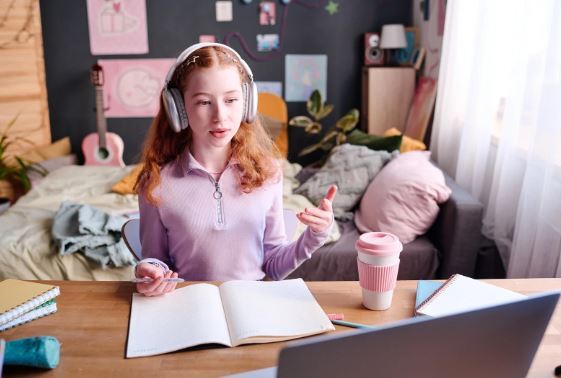
Microlearning can boost retention rates by 20% or more. The Department for Education also highlights in its guidance on remote education that shorter, well-structured lessons improve accessibility and engagement, particularly for pupils learning at home.
Why Microlearning Is Perfect for Home Education
Families who choose an online homeschool curriculum UK often value flexibility and the ability to tailor learning to the child. Microlearning supports this by:
- Fitting around family life. Short lessons can be slotted between work, chores, and other commitments.
- Supporting different ages. When siblings are at different stages such as KS2 versus KS3, short lessons make it easier for parents to balance.
- Reducing stress. Shorter lessons are less overwhelming and encourage consistent daily study habits.
- Encouraging independence. Children can take more ownership of their progress when tasks are manageable.
For many families, the shift to short online homeschool courses has been genuinely transformative.
How EdEx Online Delivers Microlearning
At EdEx Online, we have designed our online curriculum UK around microlearning principles.
- Our KS3 online learning and International GCSE preparation courses are structured into short, focused modules.
- Each lesson is taught by a UK-qualified teacher for clarity and quality.
- Students can pause, rewind, and rewatch lessons as often as needed, ideal for mastery and revision.
- Parents benefit from a clear course structure, whether supporting Pearson Edexcel IGCSE subjects or steady KS3 progression.
With EdEx Online Education, families do not need to build entire schedules from scratch. Our online homeschool courses are already designed to fit seamlessly into busy lives.

Practical Tips for Parents
Here are a few ways families can make microlearning work best at home:
- Set a routine. Encourage short, daily sessions rather than weekend cramming.
- Rotate subjects. Flexible learning plan means you can switch between subjects and topics.
- Celebrate small wins. Finishing a short lesson boosts motivation, especially for younger learners.
- Encourage reflection. After each session, ask your child to summarise what they learned in one sentence.
FAQs
Research shows that microlearning improves student motivation because it allows for self-paced learning that can be done anytime, anywhere. This flexibility helps children engage more consistently, reduces fatigue, and makes learning feel like a natural part of everyday life rather than a heavy commitment.
Our online homeschool UK curriculum is designed around short, structured lessons. Whether working through KS3 online learning or Pearson Edexcel IGCSE subjects, courses are tailored for busy family schedules.
Absolutely. By tackling topics step by step, students build strong foundations. Our approach ensures full coverage of IGCSE subjects, with reviewability built-in for reinforcement.
It works for all ages, but especially IGCSE/KS4, and early International GCSE preparation, when attention spans are less sustained and shorter lessons help maintain focus.
Conclusion
Microlearning is more than a buzzword. It is an educational strategy that makes learning flexible, engaging, and effective, particularly for families navigating homeschooling lifestyle. At EdExOnline.co.uk, our online homeschool courses and online curriculum UK are built with microlearning at heart, combining quality teaching with self-paced, compact lessons. Whether your child is starting KS3 online learning or preparing for Pearson Edexcel IGCSE exams, microlearning makes every step achievable.